The ISEE Test Dates And Format

What is the ISEE?
The Independent School Entrance Exam (ISEE) is a widely used admissions assessment for independent and private schools across the United States and internationally. It provides schools with a consistent, research‑based measure of a student’s academic skills and reasoning abilities. The exam is administered by the Educational Records Bureau (ERB) and is available in multiple formats, including online, paper‑based, and at‑home testing.
Students may take the ISEE up to three times per year, once per testing season. This structure gives families flexibility and allows students to demonstrate growth over time

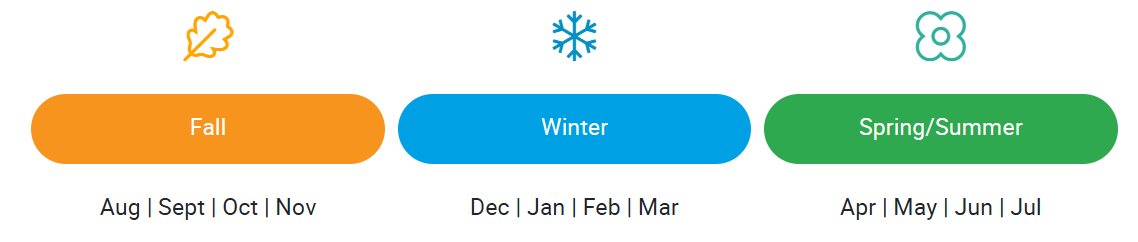
ISEE Testing Seasons
The ISEE operates on a three‑season calendar, and students may test once per season:
Fall Season: August – November
Winter Season: December – March
Spring/Summer Season: April – July
Most independent schools request scores by January or February. Many families choose to test in October or November and again in December or January, giving students time to strengthen skills between attempts.
Specific test dates vary by location and testing method, and families select their preferred date during registration.
Links:
To find and register for an ISEE test date, visit the View Test Dates page on the ERB website.
For a list of paper test dates in your area, select your state and choose Paper from the Testing Method menu.
For a list of online test dates at a Prometric center in your area, select your state and choose Online from the Testing Method menu.
For a list of at-home test dates for students applying to grades 5-12, search by New York for tests in Eastern Time, Texas for tests in Central Time, and California for tests in Pacific Time, regardless of your home state. Choose Online from the Testing Method menu and look for “ERB At Home” sessions.
For a list of at-home test dates for students applying to grades 2-4, search by New York, regardless of your home state or timezone. Choose online from the Testing Method menu and look for “ERB At Home” sessions.
ISEE Levels
The exam is offered at four levels based on the grade a student is entering:
Primary Level: Grades 2–4
Lower Level: Grades 5–6
Middle Level: Grades 7–8
Upper Level: Grades 9–12
Each level is developmentally appropriate while maintaining the exam’s core purpose: assessing vocabulary, reading comprehension, mathematical reasoning, and writing skills.
Primary Level (Grades 2–4)
The Primary ISEE is designed to be accessible and child‑friendly. It includes:
Reading: Early comprehension and vocabulary
Mathematics: Foundational number sense and problem‑solving
Writing Sample: A brief response to a simple prompt
This level focuses on early literacy and numeracy rather than advanced reasoning.
Lower, Middle, and Upper Levels (Grades 5–12)
These levels share the same five sections, with difficulty and length increasing as students progress.
Verbal Reasoning
Assesses vocabulary knowledge and word relationships through:
Synonyms
Sentence completions
Quantitative Reasoning
Measures mathematical thinking and conceptual understanding through:
Word problems
Quantitative comparisons
Logic‑based questions
Reading Comprehension
Evaluates a student’s ability to understand and analyze passages by asking about:
Main ideas
Inferences
Vocabulary in context
Author’s purpose
Passages become more complex at the Middle and Upper Levels.
Mathematics Achievement
Tests grade‑level math skills, including:
Arithmetic
Algebraic concepts
Geometry (at higher levels)
Data analysis
This section focuses on what students have learned in school.
Essay (Writing Sample)
Students respond to a prompt in 30 minutes.
Although unscored, the essay is sent directly to schools and provides insight into:
Writing ability
Organization
Clarity of thought
Voice and maturity
How the Levels Differ
While the structure remains consistent, the number of questions and complexity increase with each level. For example:
Verbal Reasoning: 34 questions at Lower Level; 40 at Middle and Upper
Reading Comprehension: 25 questions at Lower; 36 at Middle and Upper
Math Achievement: 30 questions at Lower; 47 at Middle and Upper
All three levels include the same 30‑minute essay.
Why the ISEE Matters
Independent schools use ISEE scores to understand a student’s academic readiness and potential for success in rigorous, college‑preparatory environments. Because the exam measures both knowledge and reasoning, it offers students multiple ways to demonstrate their strengths.
At The Lyceum Academy, we view the ISEE not simply as an admissions requirement, but as an opportunity for students to strengthen essential skills—critical reading, analytical reasoning, mathematical fluency, and clear writing—that support long‑term academic growth.